Day trips
The best day trips from Brindisi, with real travel times
Quick answer
Brindisi sits between Salento and the Valle d'Itria, so the best day trips are short. By car, Ostuni is about 30 to 35 minutes away, Lecce about 35 to 40, Alberobello and Polignano a Mare about 1 hour, Otranto about 1 hour 10 and Matera about 2 hours. Lecce and Ostuni are also easy by regional train, in roughly 20 to 35 minutes.
| Ostuni | About 30 to 35 min by car, about 20 to 30 min by train |
|---|---|
| Lecce | About 35 to 40 min by car, about 25 to 35 min by train |
| Alberobello | About 1 h by car |
| Polignano a Mare | About 1 h by car, about 1 h by train |
| Otranto | About 1 h 10 min by car |
| Matera | About 2 h by car |
| UNESCO sites in reach | Trulli of Alberobello (1996), Sassi of Matera (1993) |
Why Brindisi works so well for day trips
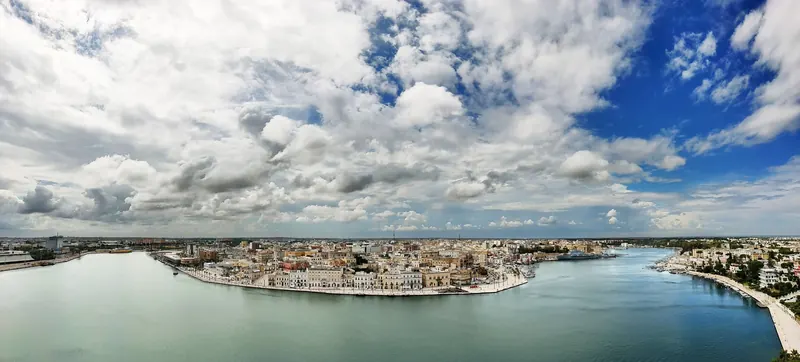
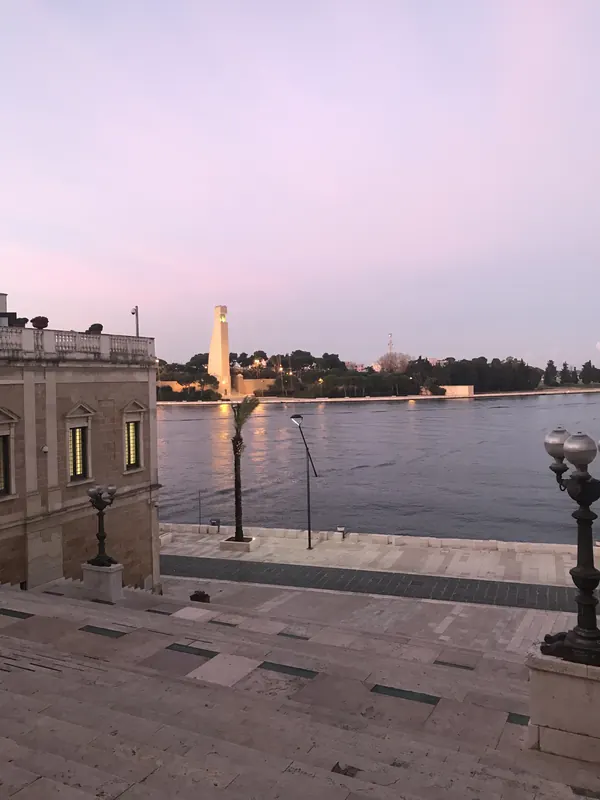
At seven in the morning the old town is still quiet. The bakery on the corner has the shutter half up, a man is hosing down the pavement, and from the rooftop you can see the harbour turning from grey to pale blue. By half past seven you can be on the road, and by eight you are walking up the white lanes of Ostuni before the tour buses wake up.
That is the whole point of Brindisi. It sits almost exactly on the line where Salento (Lecce, Otranto, the south) meets central Puglia (the Valle d'Itria, Ostuni, Alberobello, Polignano a Mare, Monopoli). From most bases in Puglia you are close to one half and far from the other. From Brindisi, both are within about an hour.
The city also has an airport about 10 minutes from the old town, a station on the main Adriatic railway line and fast roads in three directions: the SS16 north towards Bari, the SS613 south to Lecce and the SS7 west towards Taranto. Below are the trips we recommend most, with honest travel times and what each place is really good for.
How far are the main day trips from Brindisi?
Times below are typical driving times from Brindisi's old town in normal traffic. In August, add 15 to 30 minutes around the coast, and always check the day's conditions before leaving.
| Destination | By car | By train | Best for |
|---|---|---|---|
| Ostuni | About 30 to 35 min | Yes, about 20 to 30 min plus a bus or taxi up the hill | White town, sea views, nearby coves |
| Lecce | About 35 to 40 min | Yes, about 25 to 35 min | Baroque churches, food, evening walk |
| Alberobello | About 1 h | Possible with changes, slow | Trulli, UNESCO site |
| Locorotondo and Cisternino | About 50 min to 1 h | Not practical | Quiet white villages, grilled meat dinners |
| Polignano a Mare | About 1 h | Yes, about 1 h | Cliffs, sea caves, Lama Monachile cove |
| Monopoli | About 50 min | Yes, about 45 min to 1 h | Old port, sunset, walls on the sea |
| Otranto | About 1 h 10 min | Partly, with a change in Lecce | Mosaic cathedral, clear sea |
| Matera | About 2 h | Not practical as a day trip | The Sassi, UNESCO site |
For a wider comparison of bases, see our guide to Brindisi as a base for Puglia.
Lecce: is it worth a day trip from Brindisi?
Yes, and it is the easiest one. Regional trains between Brindisi and Lecce run often through the day and take about 25 to 35 minutes. Lecce station is a short walk from the historic centre, so you do not need to think about parking, which in Lecce is limited and partly inside a restricted traffic zone.
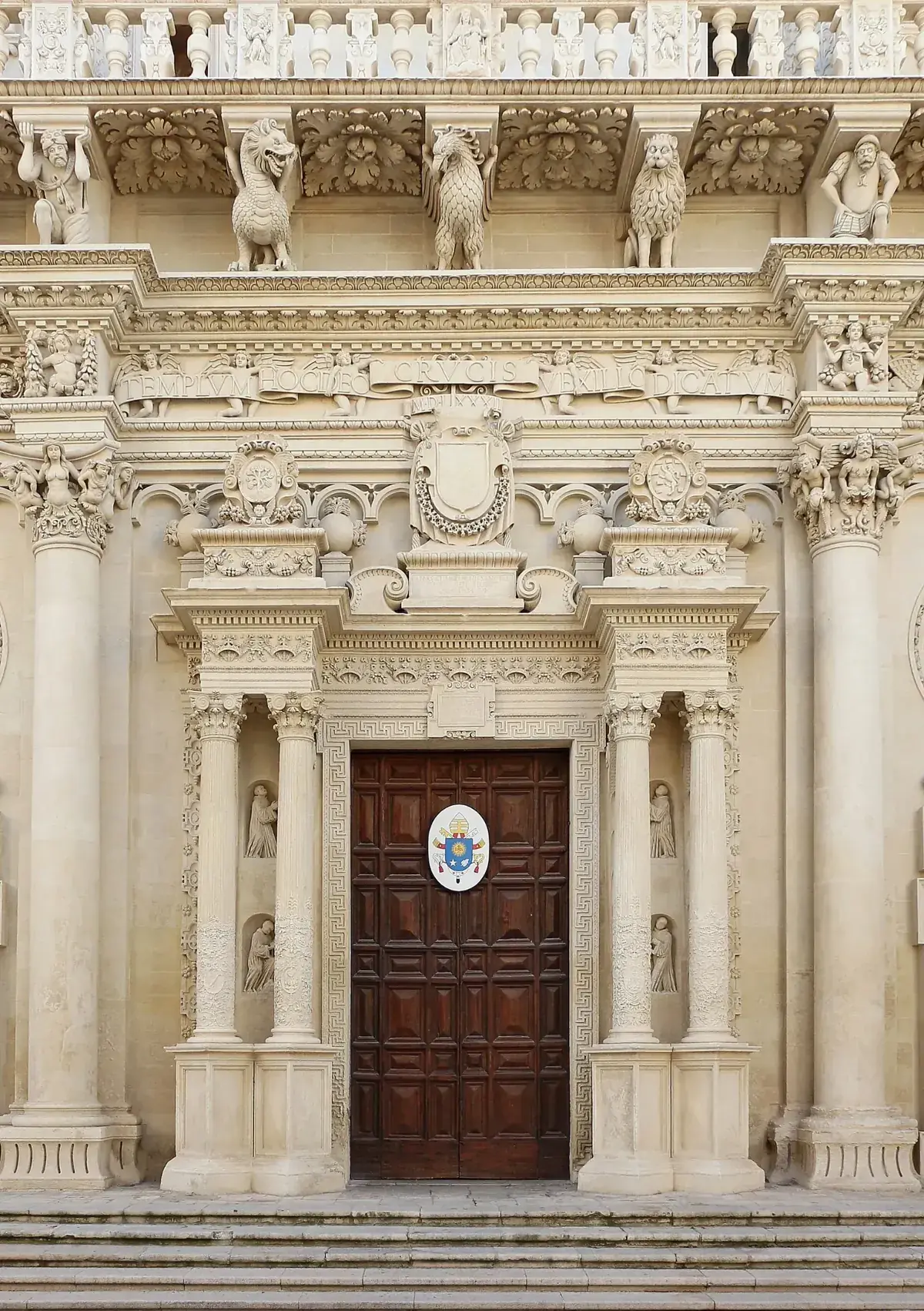
Start at Piazza Sant'Oronzo, where part of the Roman amphitheatre lies below street level. The column with the saint on top came from Brindisi: it is one of the two Roman columns that once stood above our harbour, given to Lecce in the 17th century. Then walk to the Basilica di Santa Croce, the most famous facade of Lecce baroque, and to Piazza del Duomo, a closed square that feels like a stage set.
Have a pasticciotto (shortcrust pastry with custard) at breakfast or mid-morning, and look for rustico leccese at lunch. Lecce gets very hot in July and August between 13:00 and 17:00, so do the churches in the morning and come back to the streets after six, when the stone turns gold.
Ostuni, the White City, and its coast
Ostuni is the closest of the famous towns, about 30 to 35 minutes by car. The old town wraps around a hill, all whitewash and steps, with the Cathedral at the top and views over olive groves down to the sea. It is small: two to three hours is enough to walk it properly.
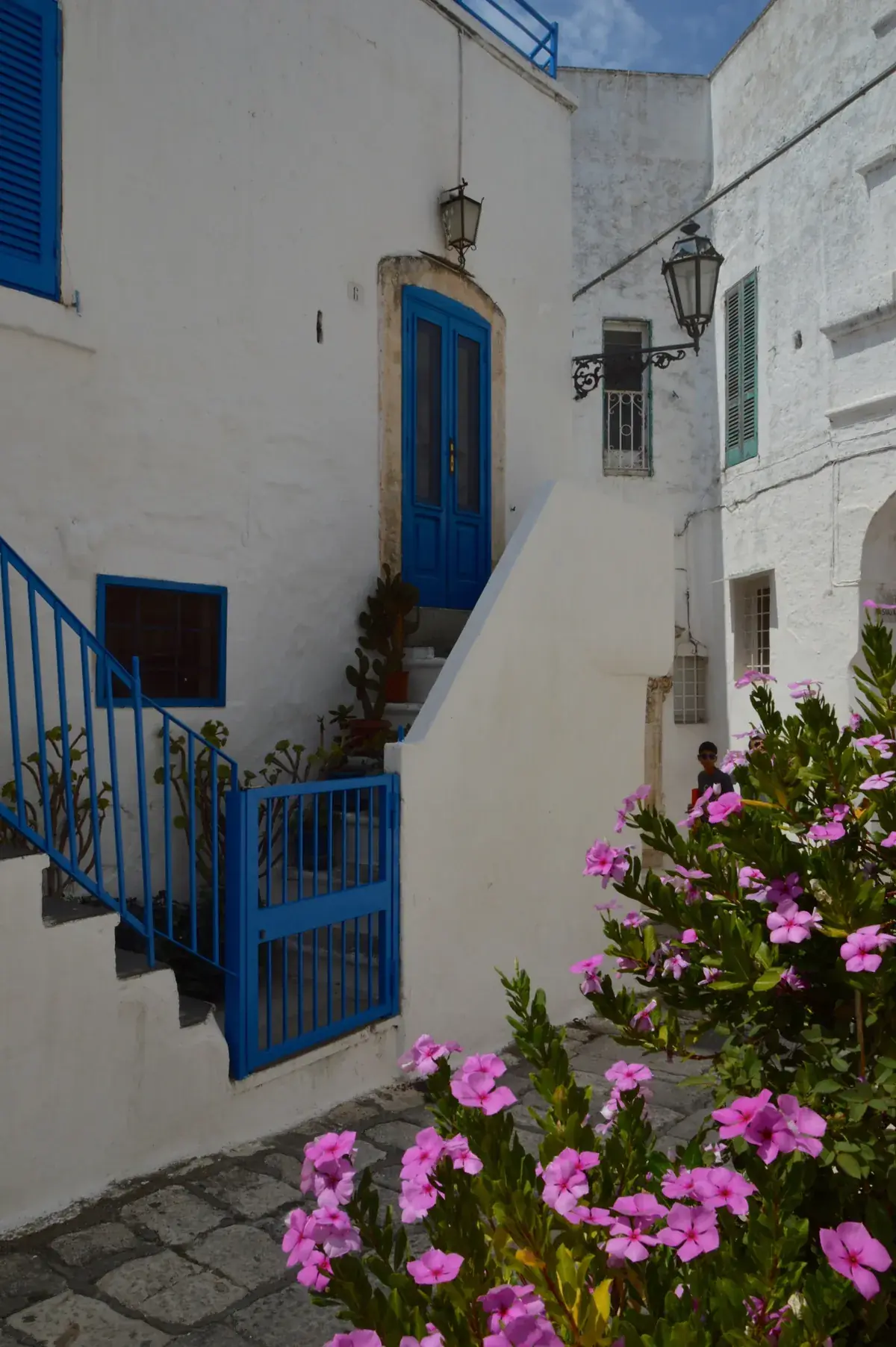
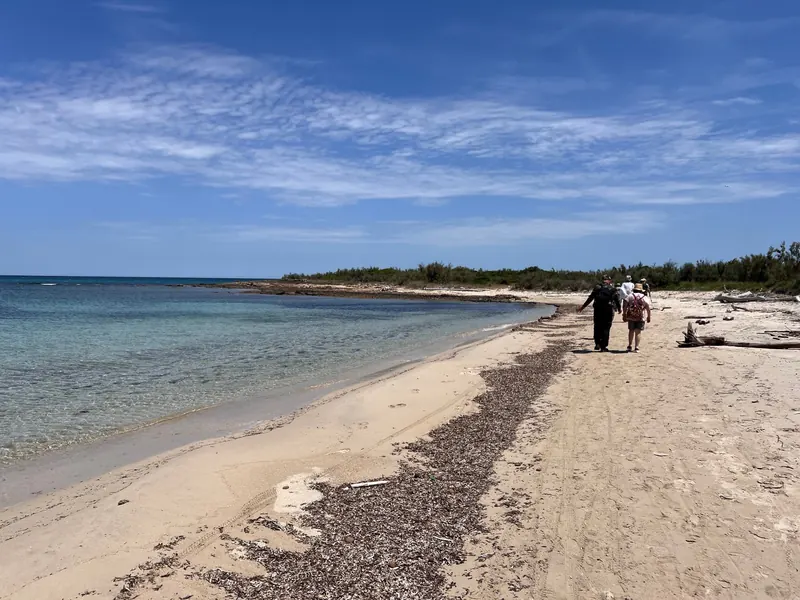
The best plan is half town, half sea. Go up to Ostuni in the morning, then drive down to the coast: Costa Merlata has small rocky coves, and the dune beaches further north are long and sandy. In the evening, Ostuni's terraces and walls are busy with people watching the sun go down. By train, Ostuni station is down in the plain, about 2 km from the centre, so you will need a local bus or a taxi up the hill.
Alberobello and the Valle d'Itria
The Trulli of Alberobello have been a UNESCO World Heritage Site since 1996: limestone houses with conical roofs built without mortar, some still lived in. The Rione Monti district has the highest concentration and the most shops; Rione Aia Piccola, across the main road, is quieter and more residential.
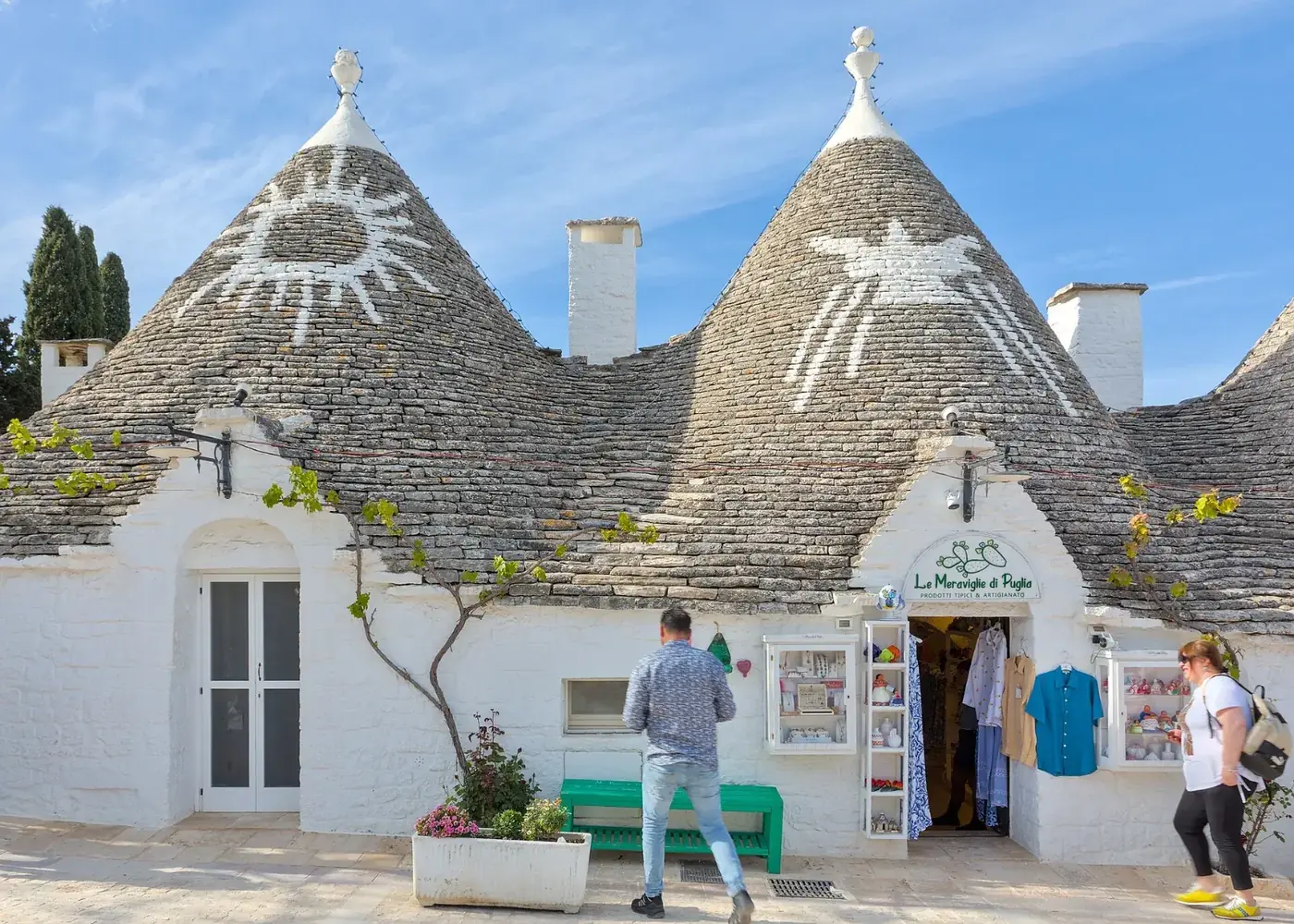
Go early. Before ten the lanes are calm and the light is soft; by late morning in summer the tour groups arrive. Then continue through the Valle d'Itria, the countryside of trulli, dry stone walls and vineyards between Alberobello, Locorotondo, Cisternino and Martina Franca. Locorotondo is a round white town with a balcony over the valley. Cisternino is known for its fornelli, butcher shops where you choose the meat and they grill it for you. Martina Franca is the largest and most elegant, with a baroque old centre and an opera festival in summer.
A car is the only sensible way to do this. Trains exist (the Ferrovie del Sud Est line), but from Brindisi they mean changes and long waits.
Polignano a Mare and Monopoli
Polignano a Mare is built on limestone cliffs above the sea. The famous view is the Lama Monachile cove, a small pebble beach between two cliffs, crossed by a bridge on the old Via Traiana. The old town is small and lovely, but in July and August it is crowded from mid-morning, so arrive early or late.
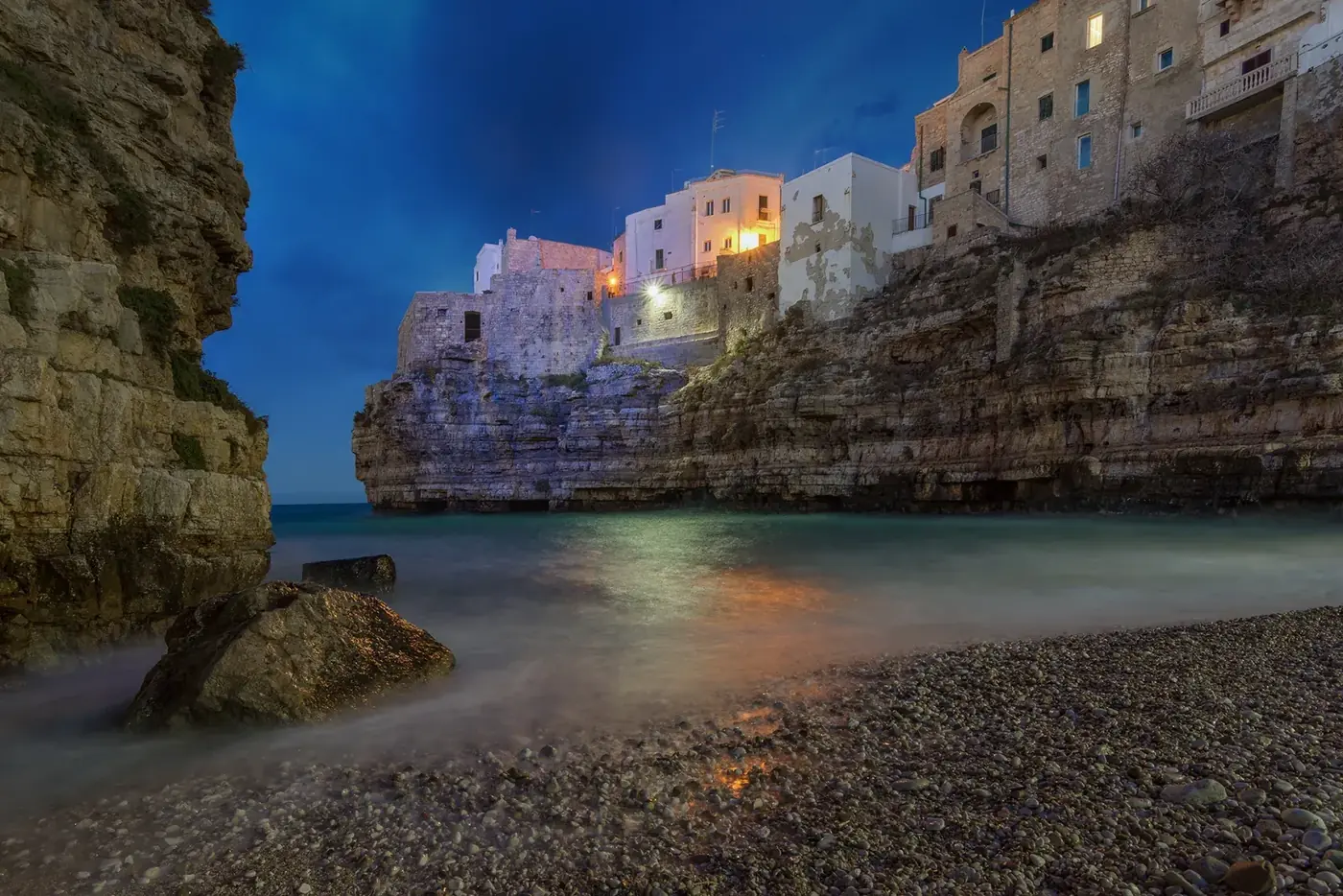
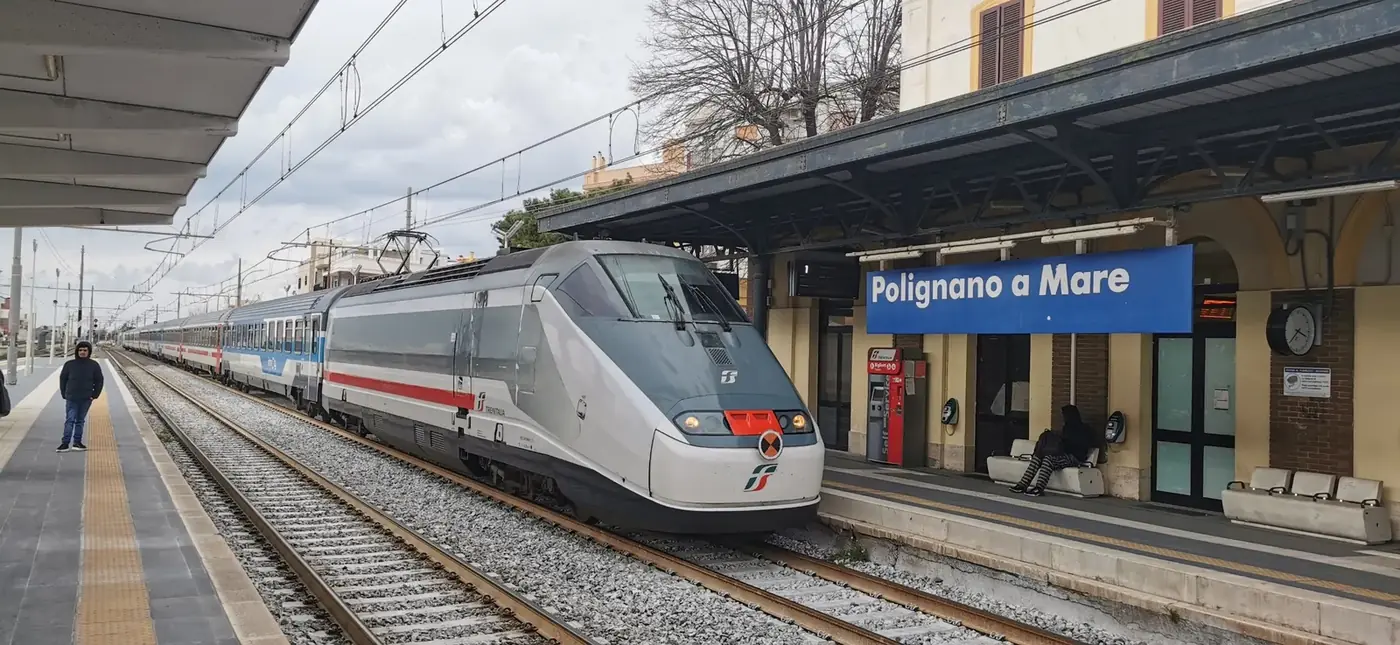
Monopoli, ten minutes south, is a working town with a beautiful old port, fishing boats painted blue, and walls running along the sea. It is our favourite place in Puglia for a late afternoon walk. Polignano and Monopoli are both on the railway between Brindisi and Bari, so this is the second day trip, after Lecce, that works well without a car.
Otranto and the Salento coast
Otranto is the easternmost town in Italy, about 1 hour 10 minutes from Brindisi by car. Its Cathedral holds a vast mosaic floor from the 12th century, made by a monk named Pantaleone: a tree of life full of animals, kings, months and strange creatures. Spend time with it; it rewards slow looking.
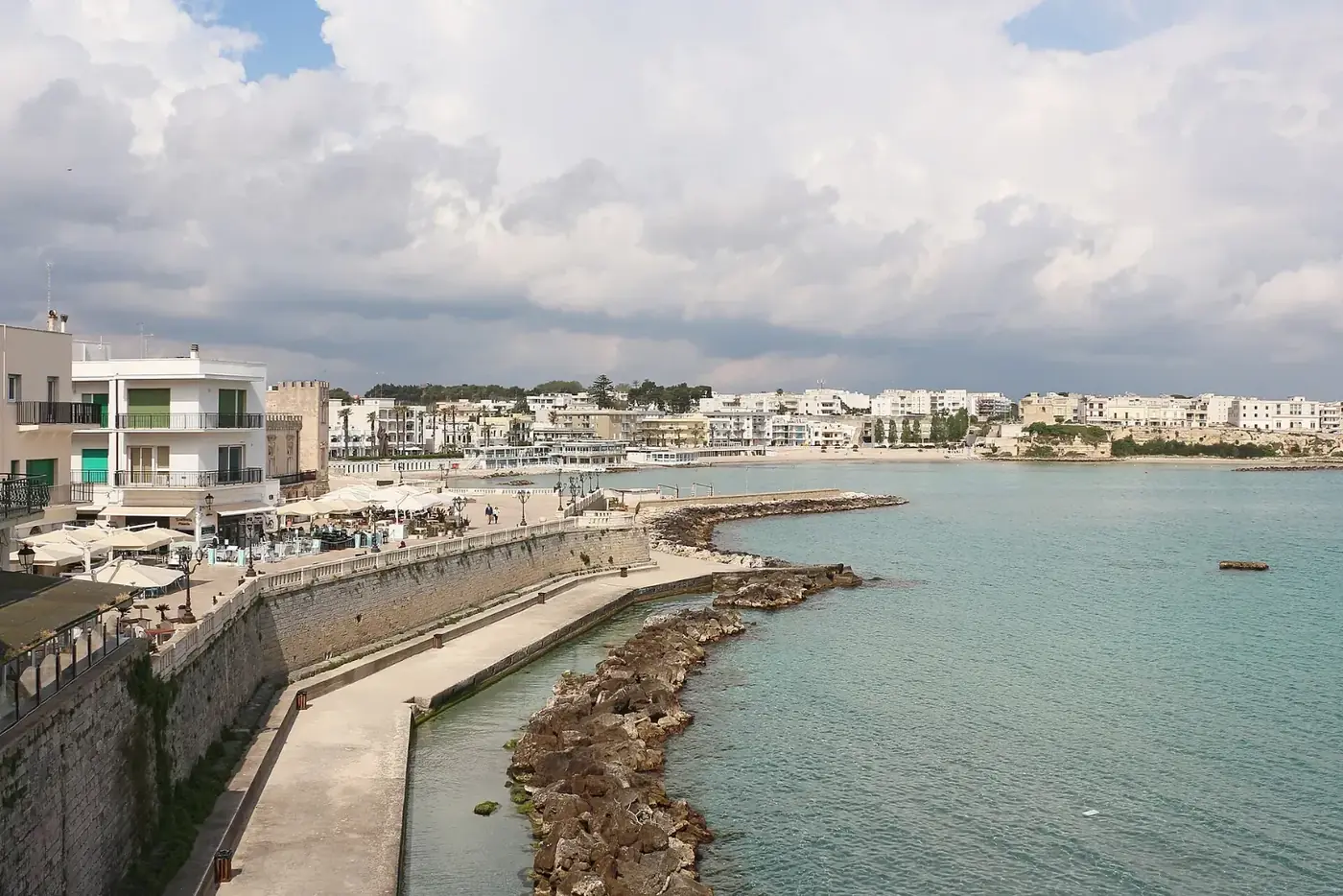
The sea around Otranto is some of the clearest in Puglia. South of the town the coast becomes rocky and high, with small coves for swimming. North of it, towards the Alimini lakes, there are long sandy beaches. A good full day is Otranto in the morning, a swim in the afternoon and the drive back at sunset. Trains to Otranto need a change in Lecce and are slow, so take the car.
Matera: a long day, but possible
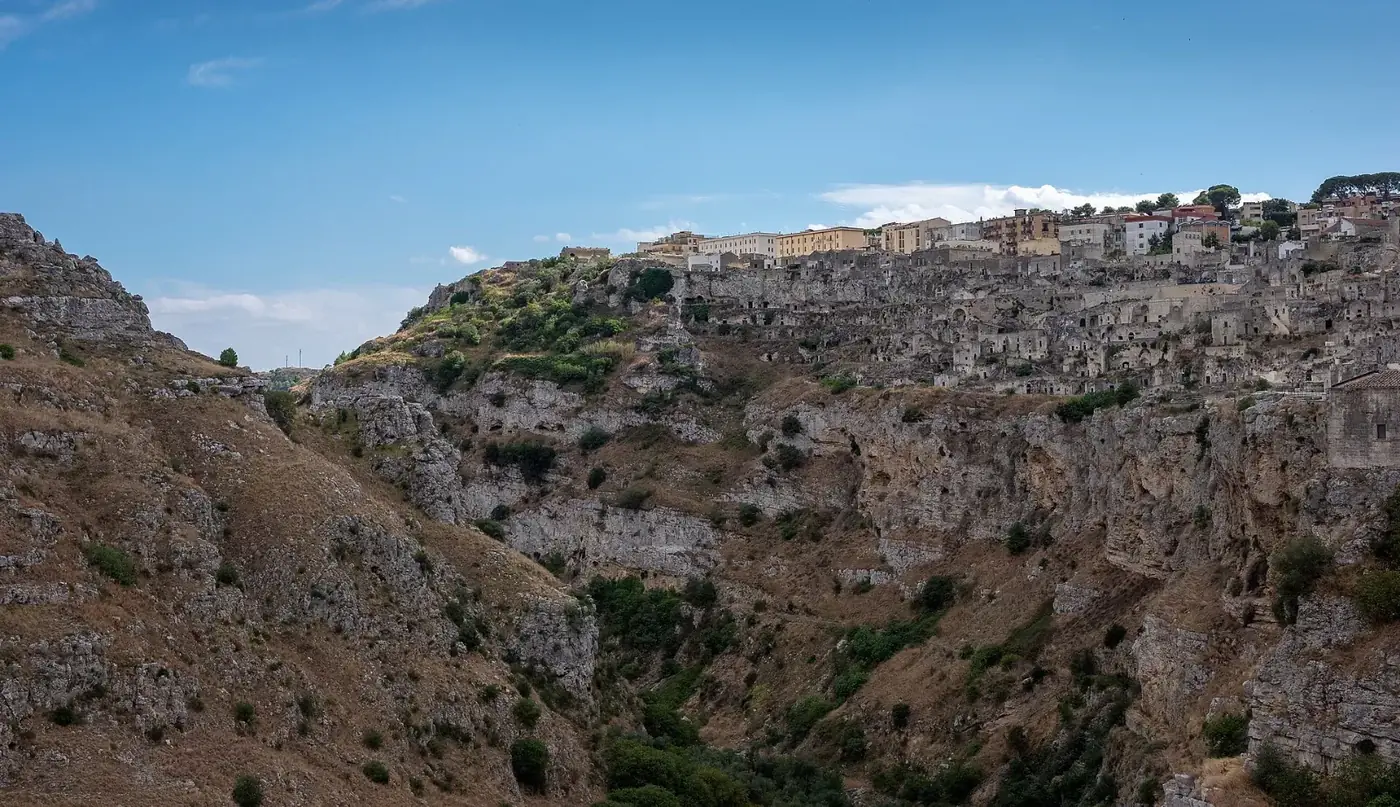
The Sassi of Matera, in Basilicata, are about 2 hours from Brindisi by car. They have been a UNESCO World Heritage Site since 1993: an ancient town of houses and churches cut into the rock of a ravine. It is a long day and we only recommend it if you leave early, drive in the cooler months, and plan to stay into the evening, when the Sassi are lit. In high summer, consider a night there instead.
Day trips without a car: what really works
If you are not driving, plan around the railway. The line from Lecce to Bari passes through Brindisi, Ostuni, Monopoli and Polignano a Mare, with regional trains run by Trenitalia and some faster Frecce. That gives you four good days:
- Lecce, the easiest, with the station close to the centre.
- Polignano a Mare and Monopoli, one stop apart.
- Ostuni, with a short bus or taxi from the station up to the old town.
- Bari old town, if you want a bigger city for a day.
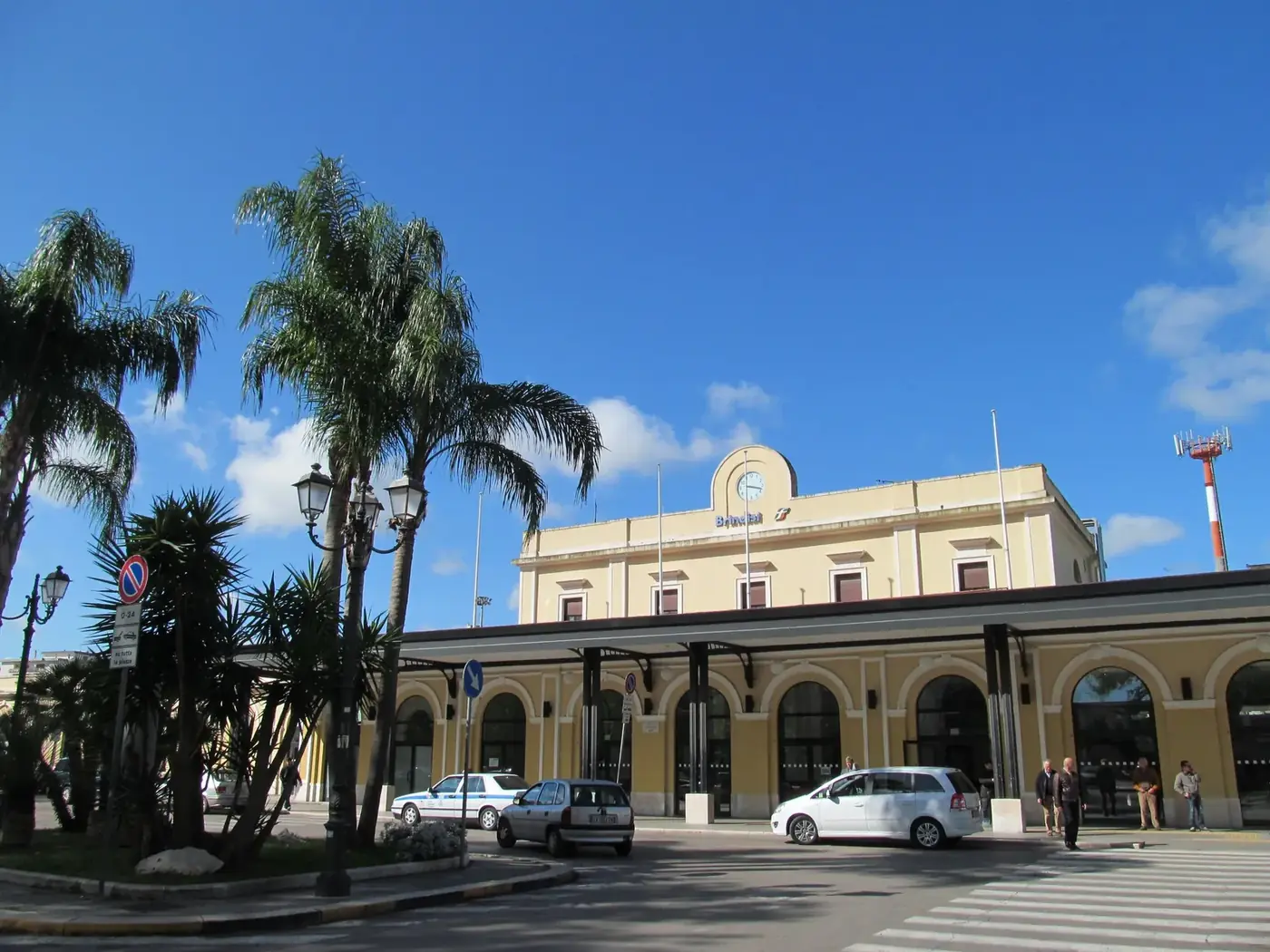
Alberobello, the Valle d'Itria villages, Otranto and most beaches are much easier by car or with a driver. Check timetables on the day, as summer and Sunday services change. BDS House is about 750 m from Brindisi station, so an early train is a ten-minute walk away.
Coming back to Brindisi in the evening
The quiet advantage of day trips from Brindisi is the evening. You come back to a calm old town instead of a crowded resort, have dinner by the harbour or on your own terrace, and sleep well before the next day. At BDS House you get a whole home in the old town for up to six people, with two private terraces, a full kitchen and free parking in Via Spalato, about 9 minutes on foot. For a full week built on these trips, see our 7-day Puglia itinerary from Brindisi, and for swimming days, our guide to the best beaches near Brindisi.
Questions travellers ask
What are the best day trips from Brindisi?
The classics are Lecce for baroque and food, Ostuni for the white town and nearby coves, Alberobello and the Valle d'Itria for trulli, Polignano a Mare and Monopoli for cliffs and harbours, and Otranto for its mosaic cathedral and clear sea. All are between about 30 minutes and 1 hour 10 minutes away by car.
How far is Lecce from Brindisi?
Lecce is about 40 km south of Brindisi. It takes about 35 to 40 minutes by car on the SS613, or about 25 to 35 minutes by regional train. Lecce station is a short walk from the old town, so the train is often the easier choice.
How do I get from Brindisi to Ostuni?
By car it is about 30 to 35 minutes along the SS16. By regional train it takes roughly 20 to 30 minutes, but Ostuni station is about 2 km below the old town, so you need a local bus or taxi for the last stretch.
Can you visit Alberobello from Brindisi in a day?
Yes. Alberobello is about 1 hour from Brindisi by car. Arrive before ten to see the trulli before the tour groups, then continue to Locorotondo or Cisternino for lunch or dinner. By public transport it is possible but slow, with changes.
Can you do day trips from Brindisi without a car?
Yes, along the railway: Lecce, Ostuni, Monopoli, Polignano a Mare and Bari all have stations on the line through Brindisi. The Valle d'Itria villages, Otranto and most beaches are much easier with a car or a private driver.
Is Matera too far for a day trip from Brindisi?
Matera is about 2 hours each way by car, so it is a long but possible day. Leave early, avoid the August heat, and stay until the Sassi are lit in the evening. If you can, spending one night there is more relaxed.
Is Brindisi closer to Salento or the Valle d'Itria?
It is close to both, which is its main advantage. Lecce is about 35 to 40 minutes south and Ostuni about 30 to 35 minutes north, with Alberobello and the trulli about an hour away. Few other bases in Puglia reach both areas this easily.
Is it easy to drive in Puglia?
Mostly yes. Main roads are wide and well signed. The hard parts are the old towns, which often have restricted traffic zones (ZTL) and limited parking, so park outside the centre and walk in. Watch for ZTL signs, as fines arrive by post.
Sources and further reading
- UNESCO: The Trulli of Alberobello
- UNESCO: The Sassi and the Park of the Rupestrian Churches of Matera
- Trenitalia: timetables and tickets
- Visit Puglia, official tourism site
Times and prices are approximate and change by season. Last checked on 3 October 2026.